
Fundraising Intelligence: How to Use AI for Deeper Insights
It’s no secret that artificial intelligence (AI) has transitioned from a novel technology trend to an innovation that’s allowing many organizations—including nonprofits—to meaningfully increase efficiency and future-proof their operations. But while 92% of nonprofits leverage AI in some capacity as of 2026, only 7% report major impacts from it. Strategy is generally what sets these organizations apart—rather than casually experimenting with AI, they’ve fully integrated it into their workflows for more intelligent fundraising.
Fundraising intelligence empowers your nonprofit to use data to connect with supporters and accomplish goals in smarter, more efficient ways. In this guide, you’ll learn all you need to know about intelligent fundraising, including:
- Fundraising Intelligence FAQ
- Steps of the Fundraising Intelligence Process
- How to Apply Fundraising Intelligence at Your Nonprofit
Let’s get started by diving deeper into what fundraising intelligence is and how it can benefit your nonprofit.
Fundraising Intelligence: Frequently Asked Questions
What is fundraising intelligence?
Fundraising intelligence is the process of using technology to analyze and interpret data, which then helps your nonprofit raise money more effectively. This framework goes beyond basic data collection by integrating AI-driven fundraising insights that take your analysis and interpretation capabilities to the next level for better results.
While learning about fundraising intelligence, you may come across the term “business intelligence,” which is essentially fundraising intelligence’s for-profit counterpart. Business intelligence involves using data and AI to help company leaders make data-driven decisions that drive revenue, just as fundraising intelligence does for nonprofit leaders.
How can fundraising intelligence benefit nonprofits?
Fundraising intelligence can provide your nonprofit with a variety of advantages, including:
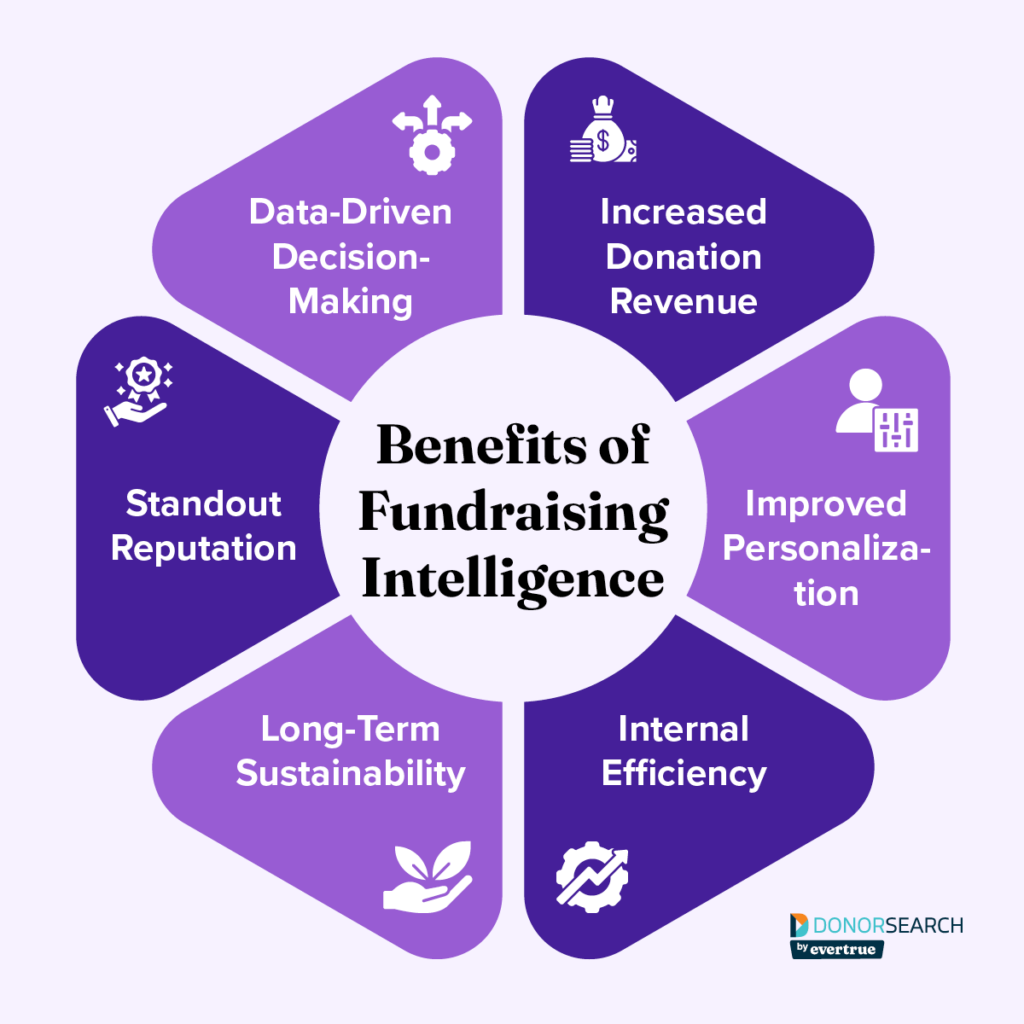
- Data-driven decision-making. AI-driven intelligence takes the guesswork out of fundraising and guides your decision-making so you can be confident in your strategy.
- Increased donation revenue. As you analyze data more deeply and use the insights you gather to reach out to the right potential donors, you’ll be better equipped to secure major gifts and achieve higher fundraising goals.
- Improved personalization. Fundraising intelligence can help you thoroughly understand your donors’ backgrounds, motivations, and engagement preferences. This way, you can tailor your approach to each supporter and make it clear that your organization values them as individuals rather than revenue sources.
- Internal efficiency. A common benefit of AI generally, but especially when it’s used in a fundraising intelligence context, is time and resource savings that allow your team to put their efforts where they’re truly needed.
- Long-term sustainability. When your nonprofit experiences more success in its fundraising efforts and intelligently future-proofs its strategy, you can focus on thriving (i.e., accomplishing long-term goals and increasing capacity) instead of just surviving.
- A standout reputation. Moving into that elite group of nonprofits that experience major impacts from AI helps your organization make a lasting impression and stand out from the crowd.
Naturally, your nonprofit will realize more of these benefits if you implement the right AI tools in the right way and train your team to use them for the right fundraising intelligence processes.
How can nonprofits implement fundraising intelligence responsibly?
Despite the widespread adoption of AI in the nonprofit sector, you may still encounter concerns from internal leaders and external community members about your fundraising intelligence approach. Many of these worries are valid, especially considering that less than half of nonprofits have a formal AI policy governing these tools’ usage. Using AI responsibly and consistently according to clear guidelines is essential to maintain trust and minimize risk as your organization implements fundraising intelligence processes.
Whether you’re developing a nonprofit AI policy for the first time or looking to improve an existing one, you can use the checklist below to ensure it aligns with the standards of the Responsible AI Framework, put forth by the Fundraising.AI collaborative.
Steps of the Fundraising Intelligence Process
The end goal of using fundraising intelligence is to more effectively and efficiently build connections with your donors and prospects, leading to greater returns on all your fundraising efforts. But what goes into a strong fundraising intelligence strategy? Let’s explore the process!
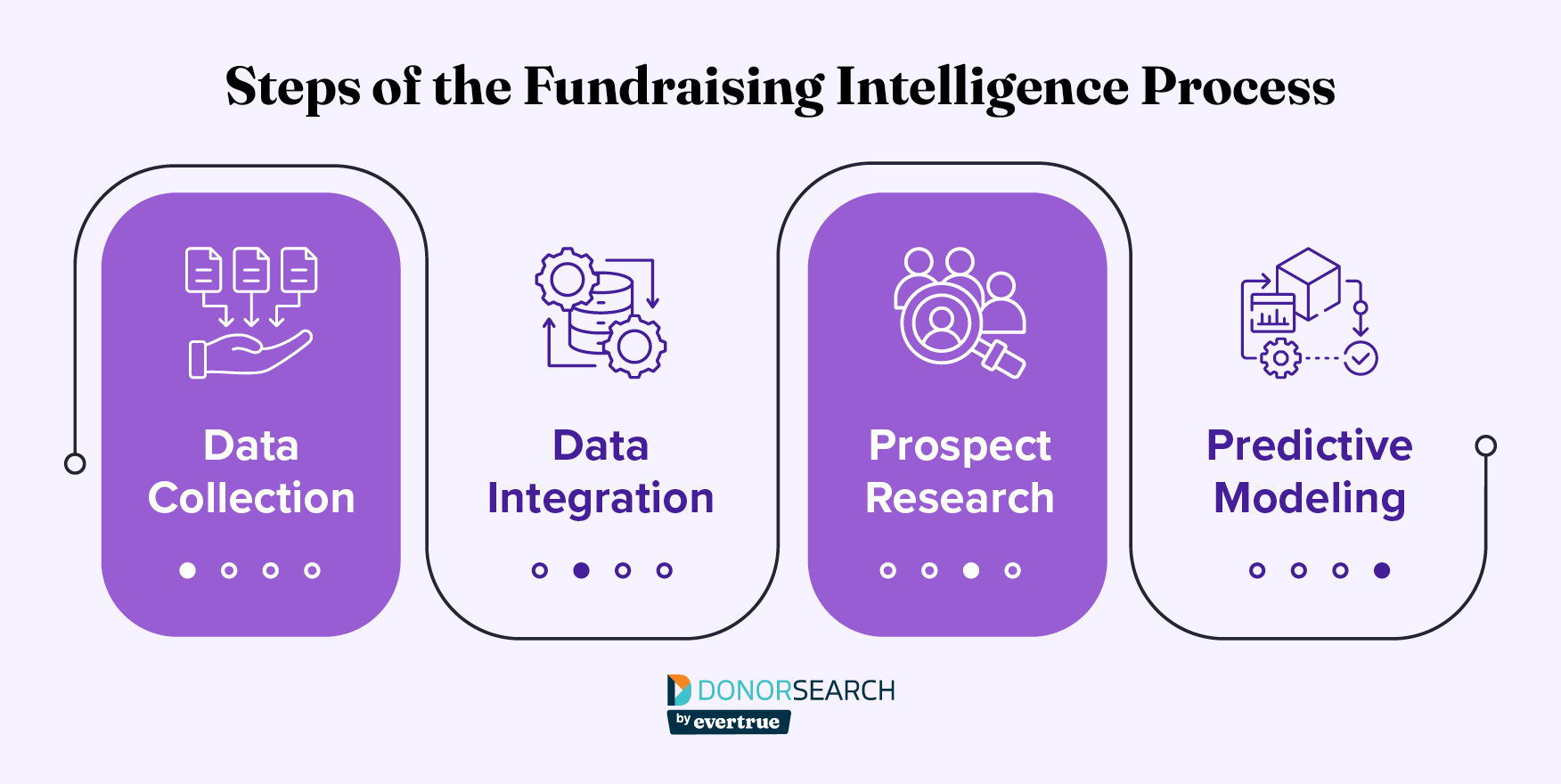
- Data collection. Intelligent fundraising begins with data—and lots of it. You already have data on your donors in your CRM (as well as from other tools like surveys, web analytics platforms, volunteer management tools, etc.), but you’ll need to supplement that data with information from trustworthy outside sources. The right databases and providers can offer details like individuals’ giving patterns and behavior, capacity details, engagement behavior, demographic characteristics, and social media activity.
- Data integration. Next, you’ll need to pull all of your data into one place. This will help you get a holistic view of who your donors are as individuals and what they need from your organization to be inspired to give.
- Prospect research and screening. You’ll look for affinity, propensity, and capacity markers that denote that an individual cares about your specific organization, is philanthropically minded, and is in the position to give a donation. When someone exhibits all three types of markers, you can be confident you’ve found a viable prospect or donor to reach out to.
- Predictive modeling. Go a step further with prospecting and screening by using a tool with predictive modeling capabilities. You can use these types of tools to predict specific donor behaviors, such as who is likely to make their first donation soon and who is likely to give over a certain amount.
The insights you gain from this process make it possible to dive into deep segmentation, strategic campaign planning, and outreach work.
How to Apply Fundraising Intelligence at Your Nonprofit
Once you’ve used fundraising intelligence to gather donor insights, it’s time to put them to good use. Try these tips to get your organization on the road to fundraising success:
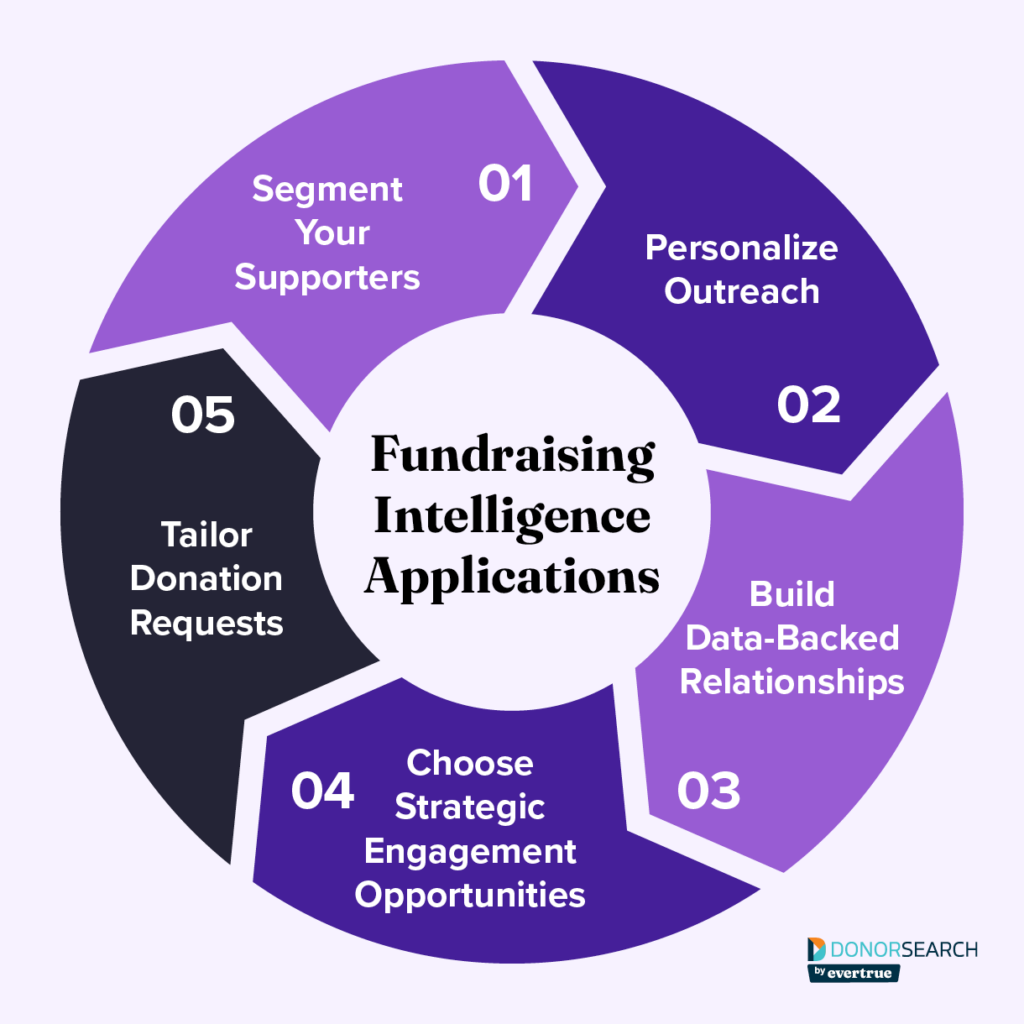
- Segment your supporters. Basic segmentation stops at using data to group supporters based on shared characteristics. Intelligent fundraising insights allow you to go deeper with segmentation so you can consider multiple factors (e.g., going beyond donors’ ability to give a certain amount into their likelihood of contributing to a specific campaign) as you develop your strategy.
- Personalize outreach. Since fundraising intelligence helps you gather a variety of data points for each individual, you’ll have more information at your fingertips that you can use to individualize communications. For example, in addition to addressing a donor by their preferred name, you may reference past contributions and involvement or mention their specific interests and values throughout your messages.
- Build data-backed relationships. Once you’ve identified a potential donor, use your insights from the intelligent fundraising process to build a strong relationship with them. Developing these connections often takes weeks or months, but it’s worth it to get to know them better, demonstrate that you value their individual support, and pinpoint why they care about your work.
- Choose strategic engagement opportunities. When you’re ready to issue an initial invitation to engage with your organization, reference your analytics to choose an opportunity that a specific supporter will respond well to. For example, if you’re fundraising for a university and you’ve learned that a prospective major donor is interested in the performing arts, you might invite them to attend your musical theatre department’s next show and give them a backstage tour beforehand.
- Tailor donation requests. When the time comes to ask for a contribution, make a specific, personalized solicitation based on what you know about an individual donor’s giving capacity and affinity. Suggest a donation amount that isn’t so high that it would offend that prospect but also doesn’t leave money on the table, and recommend gift designations that align with their interests and values as well as your fundraising needs.
The key to a smooth fundraising intelligence process and effective application is having the right tools in your toolbox that you can rely on for accurate, actionable insights—like the predictive and generative AI solutions from DonorSearch by EverTrue.
DonorSearch’s Fundraising Intelligence Solutions
DonorSearch has built on its success as the leading nonprofit prospect research platform by developing a suite of predictive AI solutions that can help organizations in all verticals and with any level of technical expertise adopt a more intelligent fundraising approach. These tools include:
- DonorSearch Ai: The most advanced machine learning solution for the nonprofit sector, which provides customizable predictive modeling of prospect research data for smarter donor identification and outreach.
- Enhanced CORE: A beginner-friendly version of DonorSearch Ai that features point-and-click visualization and six standard predictive models, including DonorSearch’s signature Most Likely to Respond (MLR) scoring.
DonorSearch also supports effective data collection by integrating with more than 40 popular donor databases and prospect research tools. Plus, since joining the EverTrue family, it’s part of a donor management ecosystem that delivers many types of AI-powered engagement insights.
More than 15,000 nonprofits trust DonorSearch for accurate, actionable fundraising intelligence—including the Children’s Healthcare of Atlanta Foundation, which identified multiple donors with a giving capacity of $5 million or more by using DonorSearch Ai!
Final Thoughts
Fundraising intelligence provides a holistic view of who your donors are and how to engage them effectively, helping your nonprofit save time and money while driving better results. Use the tips above to start tapping into the power of fundraising intelligence, and remember that the right AI tools will make all the difference in your efforts to get to know current and prospective supporters better.
For more information on fundraising analytics, check out these resources:
- Donor Analytics: How to Make the Most of Donor Data. Learn about the most common types of donor data and the insights you can glean from analyzing each one.
- Nonprofit Donor Databases: Everything You Need to Know. Discover the best tools for storing the data used in fundraising intelligence, along with management tips.
- AI Tools for Nonprofits: 30+ Top Picks & How to Get Started. Explore your options for solutions to leverage in your organization’s intelligent fundraising processes.